



.png)
.png)
.png)
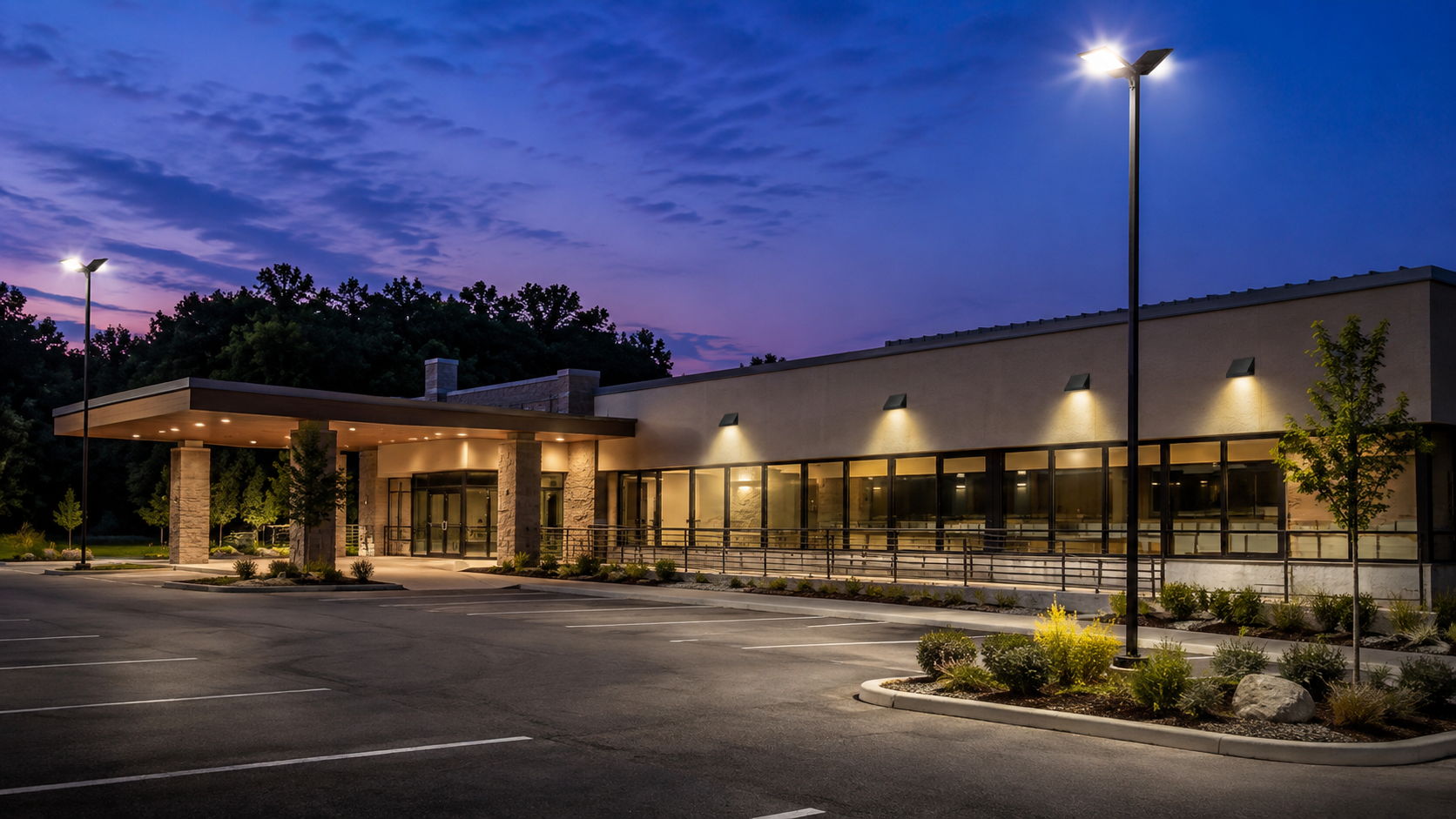
As days get shorter and outdoor lighting operates for longer hours, October is a practical time to review exterior lighting plans before winter conditions arrive. For contractors, distributors, facility teams and specifiers, the question is rarely just “Which fixture is brightest?” The better question is: Which solution fits the application, gives the project enough room to adjust, and supports long-term performance?
A well-planned outdoor lighting project usually includes several zones with different needs: building perimeters, parking areas, entrances, service zones, garages and canopies. Instead of treating each area as a completely separate problem, it helps to build the project around a consistent set of priorities: appropriate light distribution, selectable output, color temperature, environmental ratings and control options.
That is where WSFC, SKYRA and UDC come in. Together, these three outdoor families cover common exterior applications while giving you field-selectable options that can simplify planning, installation and future adjustments.
At a glance: which product fits which outdoor zone?
| Product | Best-fit applications | Selectable options | Controls-ready features |
|---|---|---|---|
| WSFC | Walls, entrances, building perimeters | 3 CCTs, 3 power settings, Type II/III/IV optics | Integrated photocell, 0-10 V dimming, sensor receptacle |
| SKYRA | Parking lots, roadways, open site areas | 3 CCTs, 3 power settings, Type III/IV/V optics | 7-pin photocell receptacle, 0-10 V dimming, sensor receptacle |
| UDC | Parking garages, canopies, covered areas | 3 CCTs, 3 power settings per model | Integrated photocell, 0-10 V dimming, sensor receptacle |
What should you consider when planning commercial outdoor lighting?
Start with the application. Mounting height, surrounding surfaces, site geometry, required light levels and how the space is used all influence fixture selection. From there, look at the factors that can make a project easier to adapt in the field:
- Light distribution: Where does the light need to go?
- Wattage and lumen output: How much light is actually required for the space?
- CCT: Which color temperature suits the application and project requirements?
- Controls: Could photocells, occupancy sensing or scheduling improve operation?
- Environmental performance: Is the luminaire rated for the outdoor conditions it will face?
- Mounting: Does the fixture support the installation method needed on site?
Selectable settings are especially useful when site conditions differ from the original assumptions. They can reduce the need to lock every decision in before installation and help one product family cover a wider range of project conditions.
WSFC: for walls, entrances and building perimeters
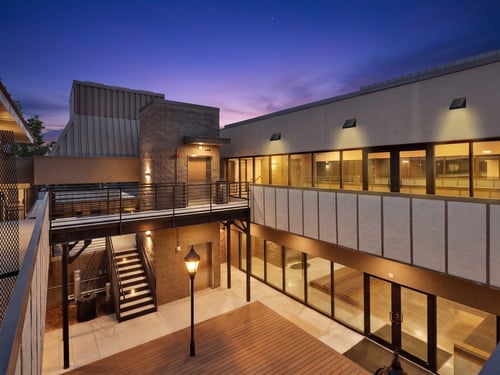
Wall-mounted lighting often has to balance visibility with control. Too little light can leave dark areas around entrances or service zones, while poorly directed light can create glare or unnecessary spill.
WSFC is a full-cutoff LED wall pack designed for this type of application. It offers three selectable CCTs—3000 K, 4000 K and 5000 K—along with selectable power settings and Type II, III and IV distributions. This gives you more room to adjust the same family for different wall locations instead of relying on a single fixed configuration.
The series operates on 120–347 V, includes 0–10 V dimming, an integrated photocell that can be disabled, and a sensor receptacle for plug-and-play compatible sensors. It is IP65 and listed for wet locations, with an operating range down to -40°C.
For projects where you need to control light around building exteriors while keeping specification choices open, WSFC can help build a more consistent project package.
SKYRA: for parking lots, roadways and open site areas
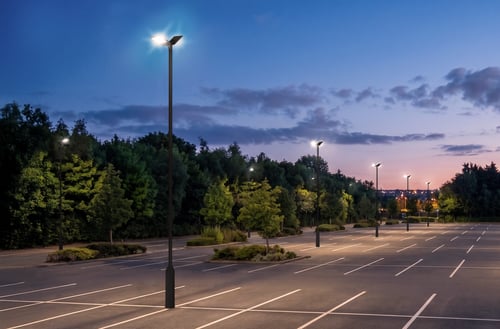
Area lighting introduces a different challenge: covering larger spaces while controlling how light is distributed across parking lots, roadways, yards or other open exterior zones.
SKYRA is built to scale across these applications. The family offers selectable wattages from 35 W up to 300 W, three selectable CCTs, and Type III, IV and V distributions. That range allows one family to support smaller exterior areas as well as larger site-lighting applications.
The series includes 0–10 V dimming, standard 10 kV surge protection, a 7-pin photocell receptacle with shorting cap, and a sensor receptacle for compatible smart and non-smart sensors. SKYRA is IP65, wet-location listed and available with several mounting options, including slipfitter and pole-mount solutions.
For projects where responsible outdoor lighting is part of the discussion, SKYRA also includes configurations identified in the specification as DLC Premium and Dark Sky. Always verify the exact selected model against current project requirements and applicable qualification lists.
UDC: for parking garages, canopies and covered exterior areas
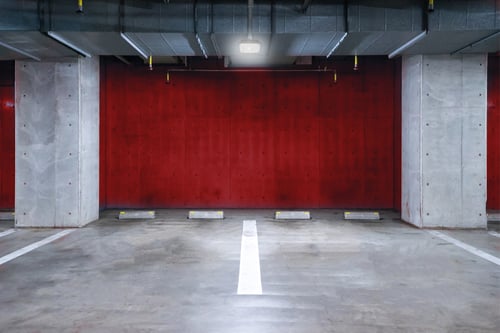
Covered spaces need a different lighting approach than open parking lots. Lower mounting heights, ceilings and structural elements can change how light spreads and where dark spots appear.
UDC is designed for under-canopy and garage applications, with selectable 3000 K, 4000 K and 5000 K CCTs and two power ranges: 48/64/80 W and 72/96/120 W. Its broad 150° beam helps support wide coverage in covered areas, while the three-in-one mounting solution supports surface, pendant and conduit installations.
UDC also includes 0–10 V dimming, an integrated photocell and a receptacle for compatible sensors. It is IP65, wet-location listed and rated for operation down to -40°C.
For parking structures, canopies and covered drive lanes, UDC adds another adaptable building block to an outdoor project package.
How do controls fit into an outdoor lighting project?
Outdoor lighting does not always need to operate at full output for the entire night. Depending on the application, photocells, occupancy sensors, dimming and scheduling can help align lighting operation with actual site use.
All three families are controls-ready, making it easier to plan for sensing or smart control strategies without treating controls as an afterthought. Compatible Wave Bluetooth® Mesh accessories are available for selected configurations, so the control strategy can be considered alongside the luminaire selection.
The important part is to start with the project requirements. Controls should support the way the site operates, not add complexity without a clear purpose.
One outdoor project, three application zones
The right outdoor lighting plan is not about finding one fixture for every condition. It is about choosing the right solution for each zone while keeping the overall project manageable.
Use WSFC where controlled wall-mounted lighting is needed around entrances and building perimeters. Use SKYRA where larger open areas require pole- or wall-mounted area lighting. Use UDC for garages, canopies and other covered exterior spaces.
Because these three families share selectable performance, wide-voltage operation, dimming and controls-ready features, they can help create a more consistent approach across the project.
Need help narrowing down the right configuration? Send us your project requirements. We can help you review the application, mounting conditions and control needs so you can move forward with the right outdoor lighting package. Contact us to get started.
FAQ